Decision 01 · Insight 03
Hick's Law
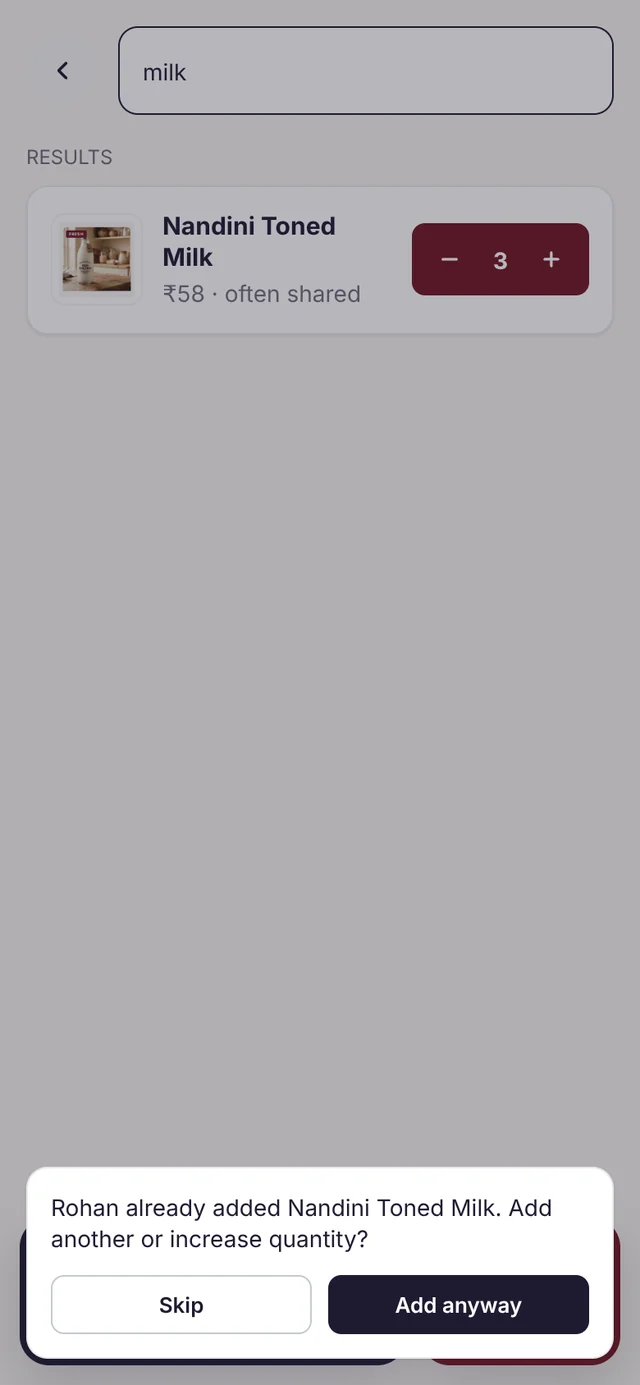
Duplicates get two buttons. Skip, or add anyway. One tap, never a menu. A person with thirty seconds of patience will not open a menu.
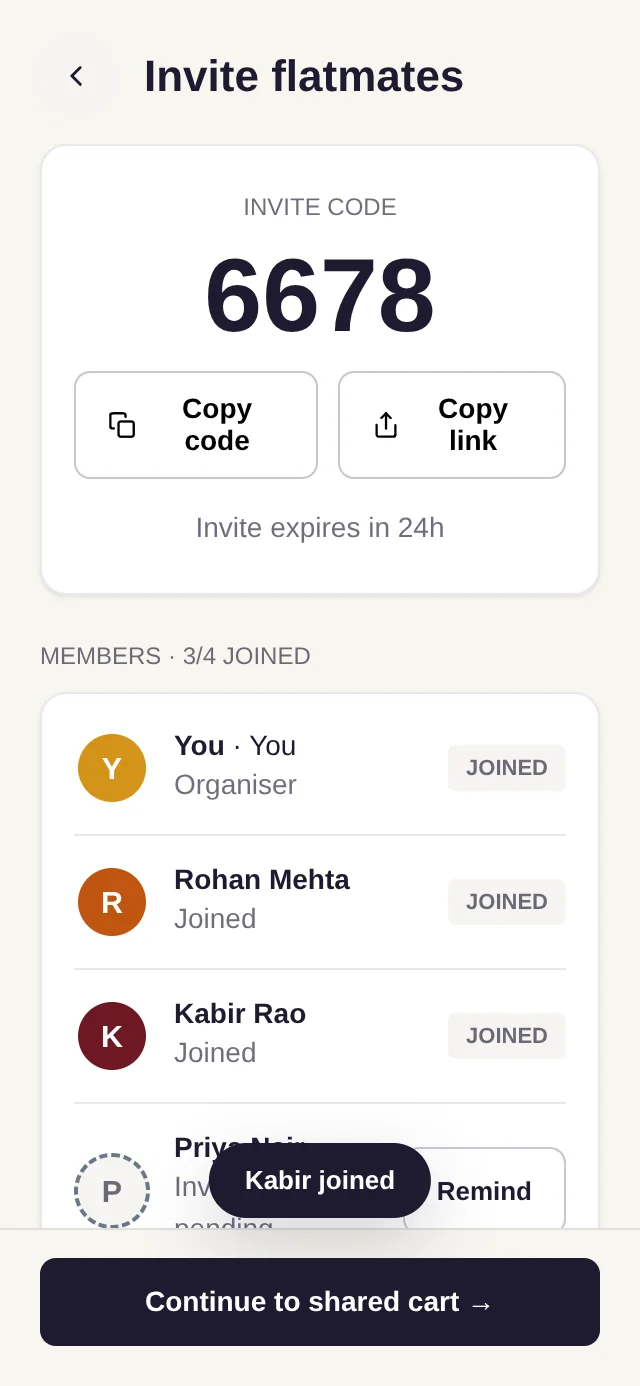
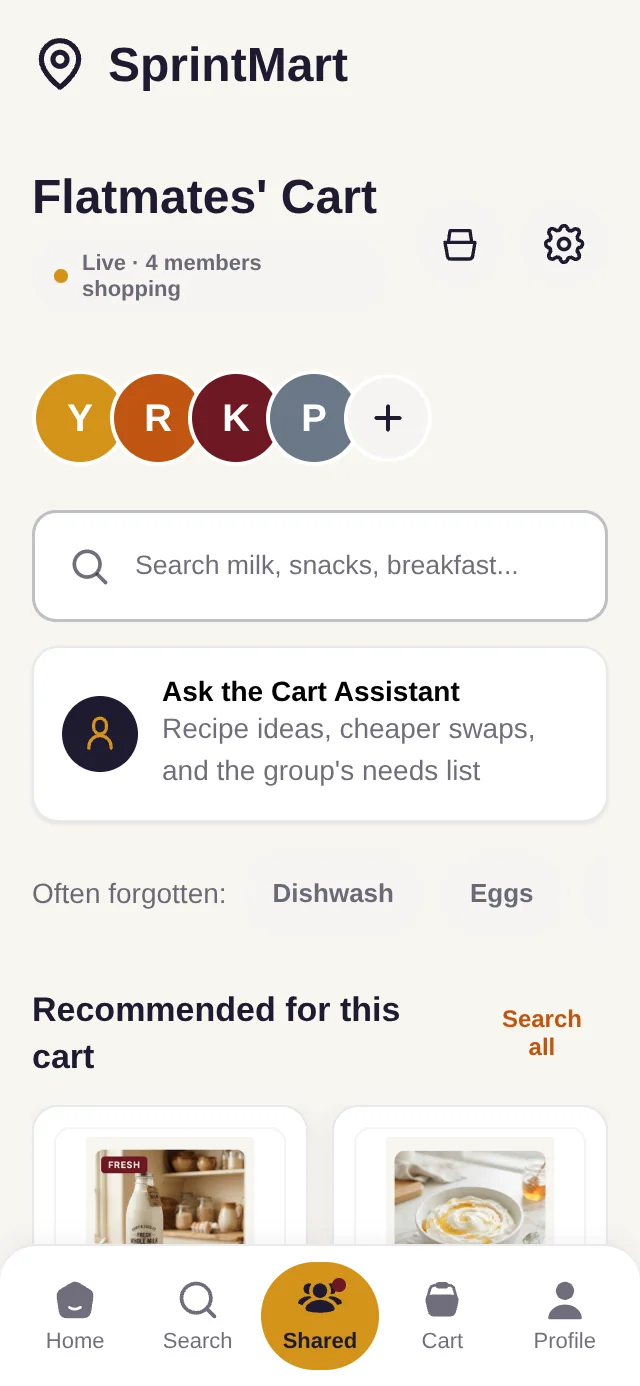
Requests trickle into WhatsApp. One person collects them from memory, orders alone and pays the whole bill, then spends two days chasing everyone for their ₹600. Every quick commerce app treats all of that as one shopper.
Six of us split into tracks for the sprint. Mine was household ordering: 12 interviews, a 60-person survey, and five real group order threads read line by line. The others covered store operations, delivery trust and the base build. Four findings shaped the feature.
Duplicates get two buttons. Skip, or add anyway. One tap, never a menu. A person with thirty seconds of patience will not open a menu.
The budget is public. One cap that every member can see, editable until the cart locks, so nobody is surprised at checkout.
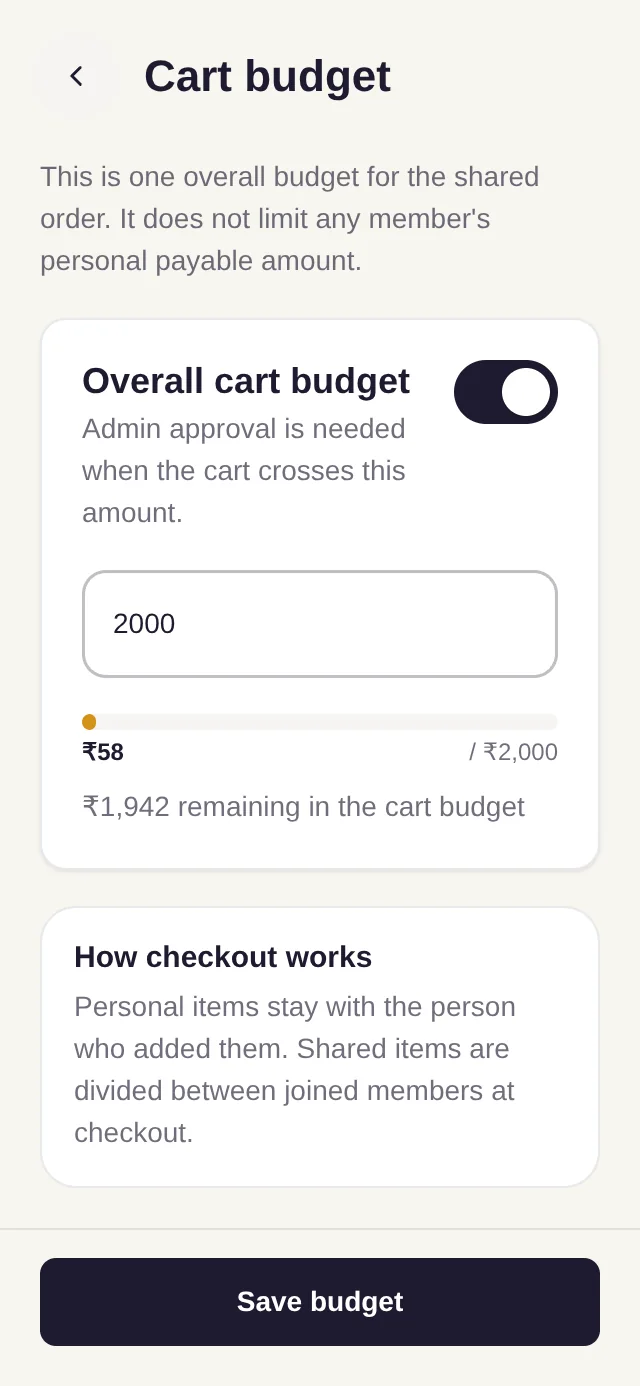
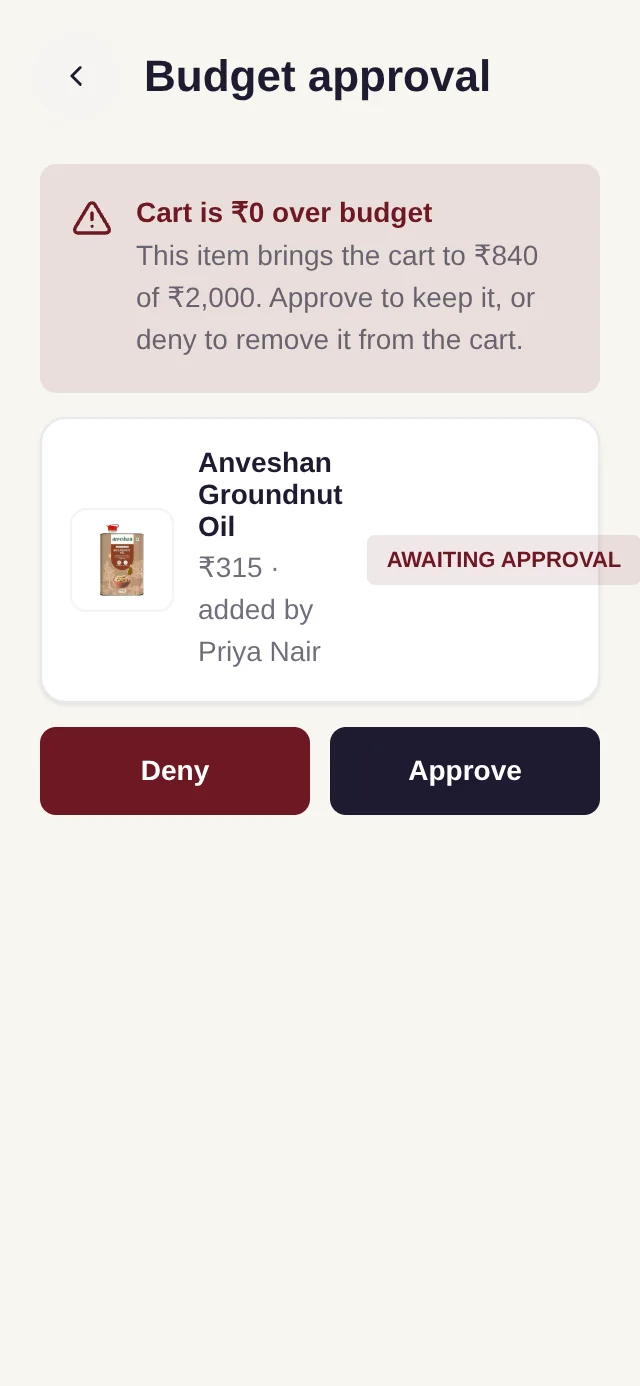
Over-cap items wait, silently. The Organiser approves or removes; the contributor never sees a call-out.
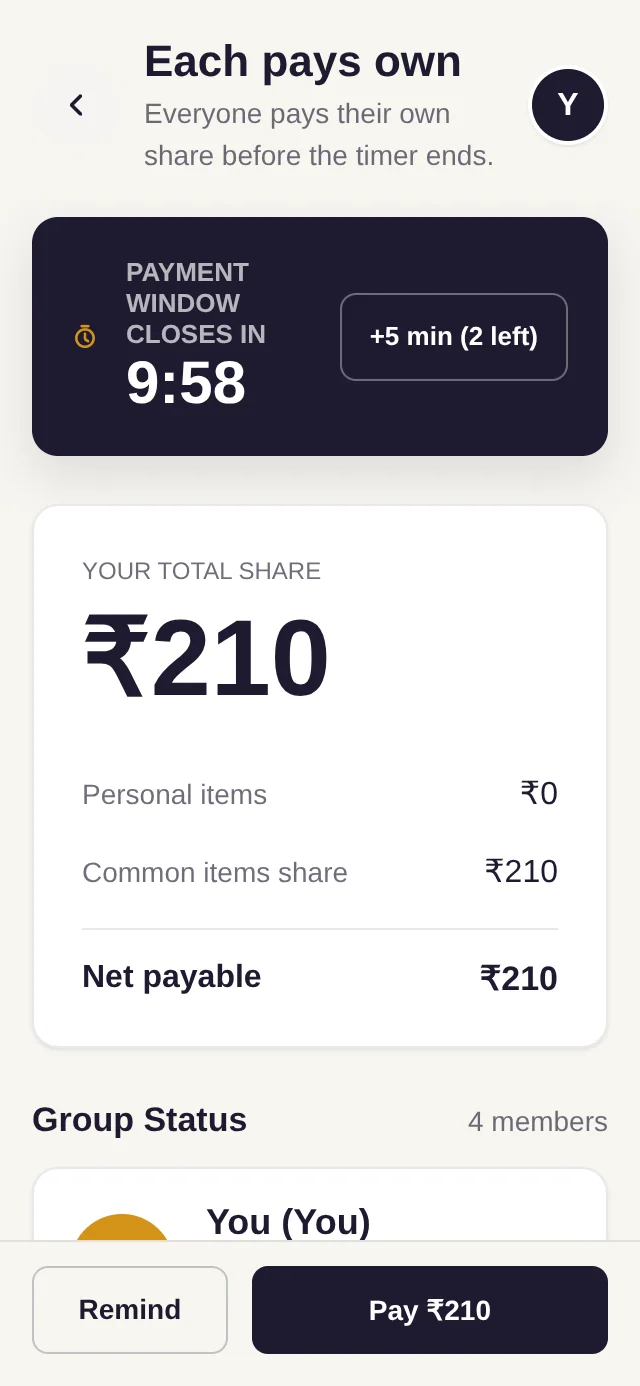
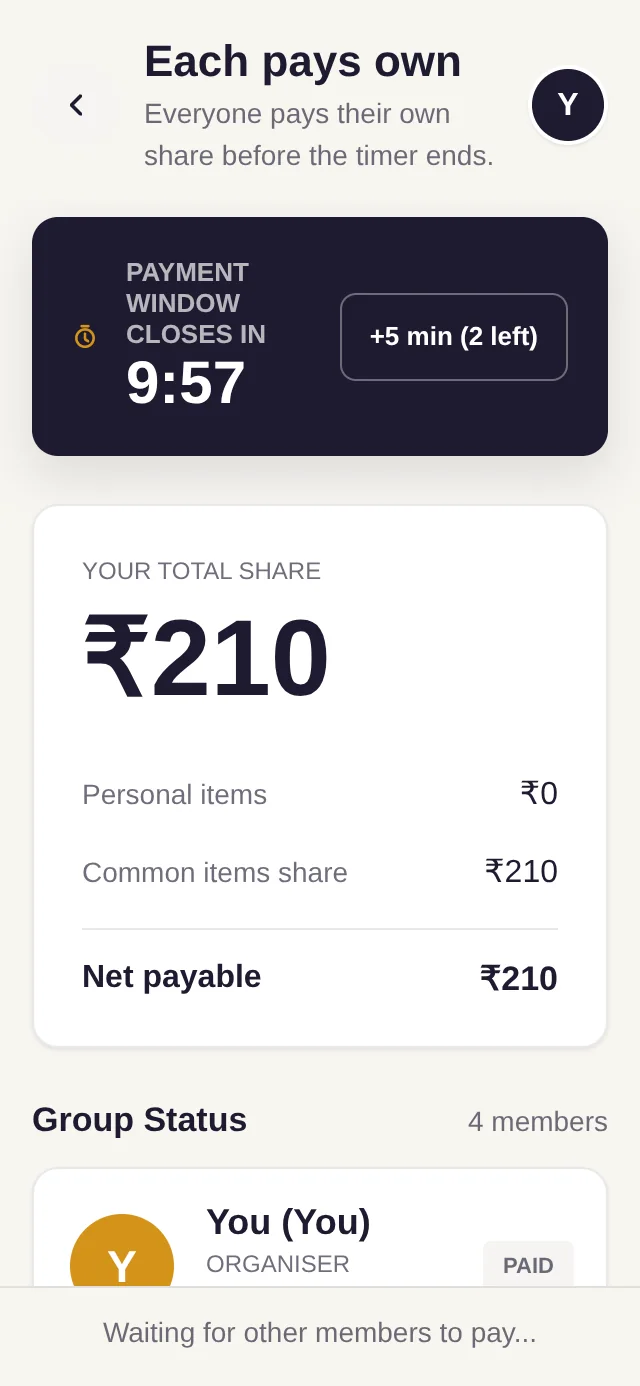
Everyone pays their own share inside a ten-minute window. If someone misses it, the cart does not die. The organiser covers that share and the groceries still arrive.
This is a college project. There is no usage data and I am not going to pretend there is. What I will claim is a working multi-user feature that Blinkit, Zepto and Instamart do not ship. I checked all three myself.
If it shipped, I'd measure: